
About Arestin
The Breakthrough Way To Kill The Bacteria Causing Gum Disease and Damaging Your Health 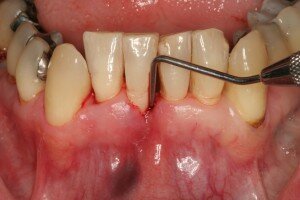
Overview
Arestin ™ antibiotic microspheres is a new treatment for gum disease (periodontal disease), an oral bacterial infection that can lead to tooth loss and many medical problems. Gum disease has been linked in new research to diseases such as heart problems, premature births, diabetes and cancer. The use of this new technology for the slow release of its potent antibacterial ingredients allows it to easily and effectively kills the bacteria that cause a highly destructive inflamatory process throughout your body. In an informal survey of the family dentists in the Encino, Tarzana, Sherman Oaks and Woodland hills areas we found that less than 10 were utilizing this very beneficial product.
Scientific Details
Gum disease occurs when bacteria build up on your teeth under and inside the gums and especially in rough areas and tartar, causing your gums to become infected. This condition, if left untreated, eventually results in damage to the fibers and destroys bone, that hold your teeth in place, and also forming open bleeding tissue between the tooth and gums. These crevices are filled with the products of bacterial infection.
As the disease progresses and these crevices become deeper and the fibers holding the teeth are destroyed, your teeth become loose and can eventually be lost. Dentists and registered dental hygienists can tell how severe a patient's disease is by measuring crevice depth, bleeding and viewing the patients x-rays.
Arestin itself is an antibiotic in the tetracycline family and is administered locally, directly into the infected areas around your teeth. A dentist or dental hygienist can place Arestin after scaling and root planing, a common procedure used to treat beginning and moderate periodontal disease. It can also be placed separately from other treatment when needed. The goal is to avoid advanced gum disease that requires surgical treatment in the hope of saving the tooth.
When used together with scaling and root planing, Arestin has been found to significantly reduce the depth of infected gum pockets and can prevent further progression of the disease. A combined therapy of Arestin plus scaling and root planing has been proven to be much more effective at fighting periodontal disease than scaling and root planing alone. Arestin was shown to be especially effective in the more difficult to treat cases such as patients that smoke.
Arestin was tested in more than 1000 adults with periodontitis at 24 universities across the country. Only very minimal side effects were found. It did not alter taste buds, stain teeth or cause stomach upset. It was also found to be tasteless. The adhesive properties mean that it will not fall out and there is nothing to be removed by the dentist or hygienist in a second follow up visit.
The use of a locally administered antibiotic is not a new concept. For years, dentists have experimented with the use of antibiotics in conjunction with scaling and root planing treatment. Dr.Michael Miller did the original research on this procedure at UCLA with a variety of agents. However, Arestin, a fourth generation product, and the first locally administered time-released antibiotic, makes Arestin much more effective. Easily placed, investigators were able to treat an average of 30 periodontal pockets, in less than ten minutes. The time for placement varies and depends on the location and number of periodontal pockets but generally speaking the procedure is fast, and comfortable.
Arestin does not require coverings because it won't leak or fall out. It is naturally absorbed by the body and does not leave anything to be removed by your dentist. It is so easy to use and no side effects have been reported. As a family, cosmetic, and implant dentist practicing in the Tarzana, Sherman Oaks, Woodland and the Woodland Hills areas we have see remarkable improvement with the use of this breakthrough product.
The cost of Arestin treatment will vary depending upon your treatment needs. After your dentist has evaluated your oral health and discussed the treatment options, he or she can provide you with an estimate of the cost. Keep in mind that treating your gum disease today is less costly and better for your health than waiting at a more advanced stage of the disease.
Remember, periodontal disease is a chronic bacterial infection, and like most bacterial infections, can be treated with an antibiotic. Dentists and hygienists typically treat periodontal disease with a procedure called scaling and root planning (SRP). SRP is a non-surgical procedure that involves a deep cleaning and root treatment above and below the gum line in order to remove plaque that and tartar that accumulates on the tooth.
When the root is smooth it eliminates plaque and tarter deposits that can breed bacteria. Although SRP is effective at removing plaque build up, it doesn't eliminate all the bacteria that cause periodontal disease. Adding Arestin™ (minocycline Hal 1 mg) helps eliminates any of the remaining bacteria.
Locally administered antibiotics play an important role in treating periodontal infection. Administered directly into the infected area, antibiotics kill microorganisms in the periodontal pockets. Minocycline microspheres has been shown to be the most effective antibiotic in eradicating the bacteria that cause periodontitis.
The trials also showed that Arestin used with SRP was particularly effective in patients with cardiovascular disease. Arestin was also effective in more difficult to treat teeth such as molars. Typically, molar teeth are hard to clean with the scaling and root planing procedure because of their shape and location in the mouth. Arestin is easy to apply, allowing dentists to reach sites and because Arestin is so adhesive, the antibiotic remains in these difficult to treat areas and kills the infection for a long period of time. Arestin can be administered quickly right after scaling and root treatment. It is most effective this way.
Gum disease can recur and needs to be checked regularly. Be sure to return for your follow-up appointments.