
Gum Disease and Periodontal Care
Did you know 80% of people have gum disease and is a major cause of tooth loss in adults? Asa dentist in Encino I recognized this as a progressive disorder, Gum disease is triggered by many factors, like plaque buildup, tobacco use, certain medications, and stress, as well as systematic disease. New research proves up to 30 percent of the population may be genetically susceptible to gum disease.
In addition, gum disease has now been linked to a number of other diseases including cancer. For anyone sincerely concerned about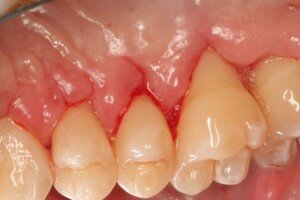 their health gum disease now should be considered a major threat. For more information on this subject read more on this in Dr. Melnick,s recently published article on this topic. There is a brief summary of the article available at the top of the page.
Gum disease begins when the bacteria groupina sticky film called plaque whichforms on the tooth surface. This causes gum inflammation. If the irritation is ignored, plaque and infection will release toxins to break down the fibers that hold your gums to your teeth. Thispermits even more bacteria and toxins to be created and enter the body.
Plaque deposits harden into calculus or tartar, which is a rough, porous substance that cannot be removed by brushing.The most damaging of all is the tartar that develops below the gum line and lacerates the gums.Over time, this progression can lead to severe infection, inflammation, bone loss, gum recession, and finallytooth loss.
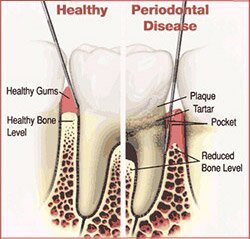
A complete examination of the gums is a necessary part of your dental visits. In addition to checking for the signs shown below, a very slim instrument will be gently placed under the gums to measure any crevice that has formed. The instrument is called a periodontal probe. Normal crevices (pockets)are 1 to 2 mm. deep.When at 4mm. deepand above it is a sign of serious gum disease. If bleeding is present with the probing that is an indication of an even more serious problem with significant infection.
|
Note the loss of bone in the picture to the right with disease present> Signs include:
If you have noticed any of the above problems, please call us to schedule a consultation. We can keep yourteeth and gums healthyforalifetime of comfortand abeautiful smile. |
 |
Types of Gum Disease and Treatments
Gingivitis: Gingivitis is a localized inflammation of the gums surrounding the teeth. Often seen as red bleeding gums, it is reversible with a thorough professional cleaning and good oral hygiene at home.There is no permanent damage to the bone or fibers supporting the teeth unless it is nt treated and becomes periodontitis.
Periodontitis: Periodontitis can range from mild to severe. The main difference between gingivitis and periodontitis is the later isaccompanied by destruction of the bone or fibers that hold the teeth in place. The diagram above shows the difference between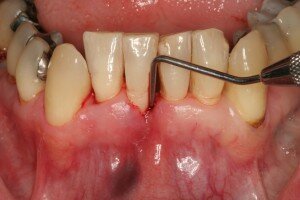 health and disease. Note how much lower the bone is in the area with infection. Also note how deep the crevice is allowing more plaque andaccumulation of food. in addition the rough tarter lacerates the gums as you eat. Untreated the process will continue until so much bone is lost that the tooth becomes loose and is lost. With the heavy loss of bone the placement of an implant restoration becomes much more difficult. Often a major surgical procedure is needed to transfer bone from another area of the body to the damaged areas of the jaw.
Treatments: In a healthy mouth a dental hygienist will remove plaque, any tartar and stain s that have accumulated on the teeth. The teeth will be polished, andflossed. Difficult stains can be removed with an ultrasonic cleaner. Oral hygiene techniques will be review as we as a medic history update to see if special care is needed.
Where disease is present a more complete form of periodontal therapy will be needed. The specially trained dental hygienest or dentist . This periodontal therapy is often called Scaling and Root Planing (SRP) or "deep cleaning" which is a inaccurate name for the treatment. With local anesthesia, very small instruments remove from the root surface the tartar and then the surfacesare smoothed. The bacteria and diseased tissue is peeled away, We strongly recommend that the area be flushed with an antiseptic to kill any remaining bacteria. While this sounds terrible and painful, it is NOT. Rarelyhave I ever seen a patient need more than a few Advil to be comfortable.
Please note: We do not recommend Laser gum therapy because it has not been proven effective. The traditional treatments have a long tract record of success. While some slight improvements have been noted with lasers, it clearly is not the "gold standard" in periodontal disease care. While some dentists will argue this point, I remind them of the fact that to the best of my knowledge nogum specialist that I am aware ofuses laser therapy. Do your research on the internet on the subject before even considering laser gum treatments.
As a final resort, surgery of the gums can be used. Surgery will remove all diseased tissue and allow for the placement of materials that can restore lost bone. The surgery is done through very small openings and heals quickly. With todays advanced techniques, surgery is rarely needed.
Home Care:
At any age, you can begin the fightagainst plaque and keep your teeth and gums healthy. It's really quite easy.
Simply Follow this Routine:
- Brush your teeth twice a day with a soft-bristled toothbrush and fluoride toothpaste to remove food particles and plaque from
 the tooth surfaces. While you're at it, brush the top surface of your tongue to eliminate bad breath and bacteria buildup.
 - Clean between your teeth daily with floss or an inter-dental cleaner. Decay-causing bacteria can linger between teeth where toothbrush bristles can't reach. Flossing removes plaque and food particles from between the teeth and under the gum line.
- Eat a balanced diet and limit between snacks. If a snack is needed, nutritious foods such as raw vegetables, plain yogurt, cheese, or a piece of fruit should be chosen.
Weoften work with or consult with Encino, Tarzana, Sherman Oaks and Woodland Hills dentists that specialize in gum disease. We can refer people to specialistsin other areas of the San Fernando Valley and Los Angeles in very special cases.
Please note that we believe in very Conservative Treatment.

"I was convinced I was going to lose all my teeth. I owe my gratitude to Dr. Melnick for the teeth I thought I would never have for very long Now I know how to keep them for my entire life." Robin W. Cosmetician, Glendale |